


By Irfan Ashraf
Pakistani food traditions, family dining and hospitality in the UAE.
Food That Carries a Sense of Home
For many Pakistanis living in the UAE, food is more than something served on a plate. It is a familiar language of home — a way to remember family gatherings, celebrate occasions, welcome guests, and stay connected to traditions while living thousands of kilometres away.
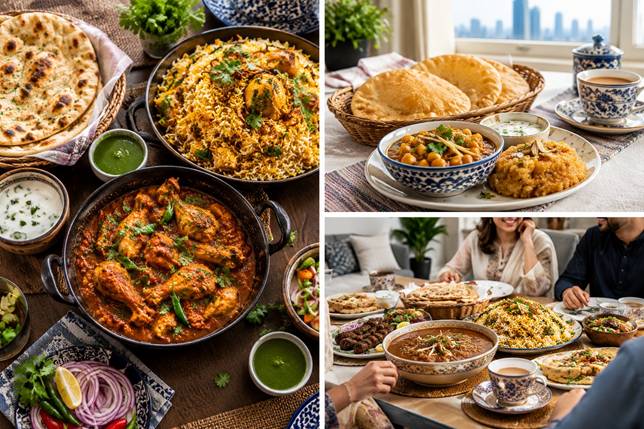
Across the UAE, Pakistani food has become part of the country’s diverse dining culture. From busy neighbourhood restaurants to family kitchens, dishes such as biryani, nihari, chicken karahi, kebabs, paratha and chana are enjoyed by people from many backgrounds. Yet behind these familiar dishes are stories about regions, family habits and the customs that give Pakistani food its character.
Biryani: More Than a Rice Dish
Biryani is perhaps one of the best-known Pakistani dishes outside the country, but there is no single way to make it. Families often have their own balance of spices, rice, meat, potatoes and herbs.
In Pakistani homes, biryani can turn an ordinary meal into an occasion. It appears at family gatherings, celebrations and weekend lunches, often prepared in a large pot so that everyone can share. In the UAE, that tradition continues. Pakistani restaurants serve their own interpretations, while home cooks adapt recipes to the ingredients and preferences available locally.
The important part is not only the recipe. Biryani represents the idea of cooking generously and bringing people together around one shared dish.
Karahi and the Art of Cooking for the Table
Chicken karahi is another dish closely associated with Pakistani dining. Cooked in a karahi with tomatoes, green chillies, ginger and spices, it is often served hot and shared with naan or roti.
The dish also reflects an important Pakistani food tradition: eating together. A meal is frequently placed in the centre of the table rather than prepared as separate portions. Family members can tear pieces of naan or roti, add curry and share several dishes at once.
That style of dining fits naturally into the UAE, where Pakistani families often gather after work, on weekends or during special occasions. It also gives diners from other cultures an easy way to experience Pakistani hospitality.
Nihari, Paratha and the Comfort of a Slow Meal
Some Pakistani foods are connected strongly with time and routine. Nihari, a slow-cooked meat stew rich with spices, is traditionally associated with leisurely meals and special mornings. Served with naan, fresh ginger, green chillies and lemon, it is a dish that rewards patience.
Paratha has a different kind of familiarity. Crisp on the outside and soft inside, it can accompany curries or become a meal with tea, eggs or yoghurt. For many Pakistanis, the smell of paratha cooking on a hot tawa is instantly connected with home.
In the UAE, these foods can be found in restaurants as well as in family kitchens. Their popularity shows how food traditions can travel with people without losing their emotional meaning.
Chaat, Chana and the Joy of Street Food
Pakistani food is not only about large family meals. Street-food traditions are equally important. Chana chaat, samosas, pakoras and other snacks bring together contrasting flavours and textures — spicy, tangy, crispy and fresh.
These foods are particularly suited to the UAE’s social environment. A plate of chaat can be shared casually with friends, while samosas and pakoras often appear at family gatherings, especially during Ramadan and other occasions.
Street food also demonstrates how Pakistani cooking can be accessible. Someone unfamiliar with Pakistani cuisine does not need to begin with a complicated feast; a small plate of chaat or a freshly fried snack can be an introduction to the wider food culture.
Tea and the Culture of Hospitality
No discussion of Pakistani food traditions would be complete without tea. Chai is part of everyday life and hospitality, whether it is served to family members at home or offered to a guest who has just arrived.
Tea creates a pause for conversation. A cup can accompany breakfast, an afternoon visit or a late-night discussion. In the UAE, where people from many countries live and work together, this simple tradition can become a bridge between cultures.
Pakistani hospitality often begins with an invitation to eat or drink something. The message is simple: sit down, stay a while and share the moment.
How Pakistani Food Is Evolving in the UAE
Living in the UAE also means Pakistani food is constantly adapting. Restaurants serve traditional dishes alongside modern presentations, while home cooks may combine familiar recipes with ingredients that are easier to find locally.
This does not necessarily mean that traditions are disappearing. Instead, they are being carried forward in a new setting. Younger generations may discover a family recipe through a parent or grandparent and then give it their own interpretation. Diners from other communities may encounter Pakistani dishes for the first time and become curious about the stories behind them.
The UAE’s multicultural food scene provides a particularly interesting setting for this exchange. Pakistani cuisine can remain rooted in tradition while becoming part of a broader culinary conversation.
A Taste of Home, Shared With the UAE
For Pakistanis in the UAE, familiar food can provide comfort and connection. For everyone else, it offers an invitation to discover a cuisine shaped by regional diversity, family traditions and a strong culture of hospitality.
The next time biryani, karahi, nihari, chaat or a cup of Pakistani chai appears on the table, it is worth looking beyond the dish itself. There may be a family story, a regional tradition or a memory of home behind it.
That is what makes Pakistani food in the UAE worth discovering: it is not simply food that travelled from one country to another. It is a living tradition, continuing to evolve while keeping its connection to home.
