
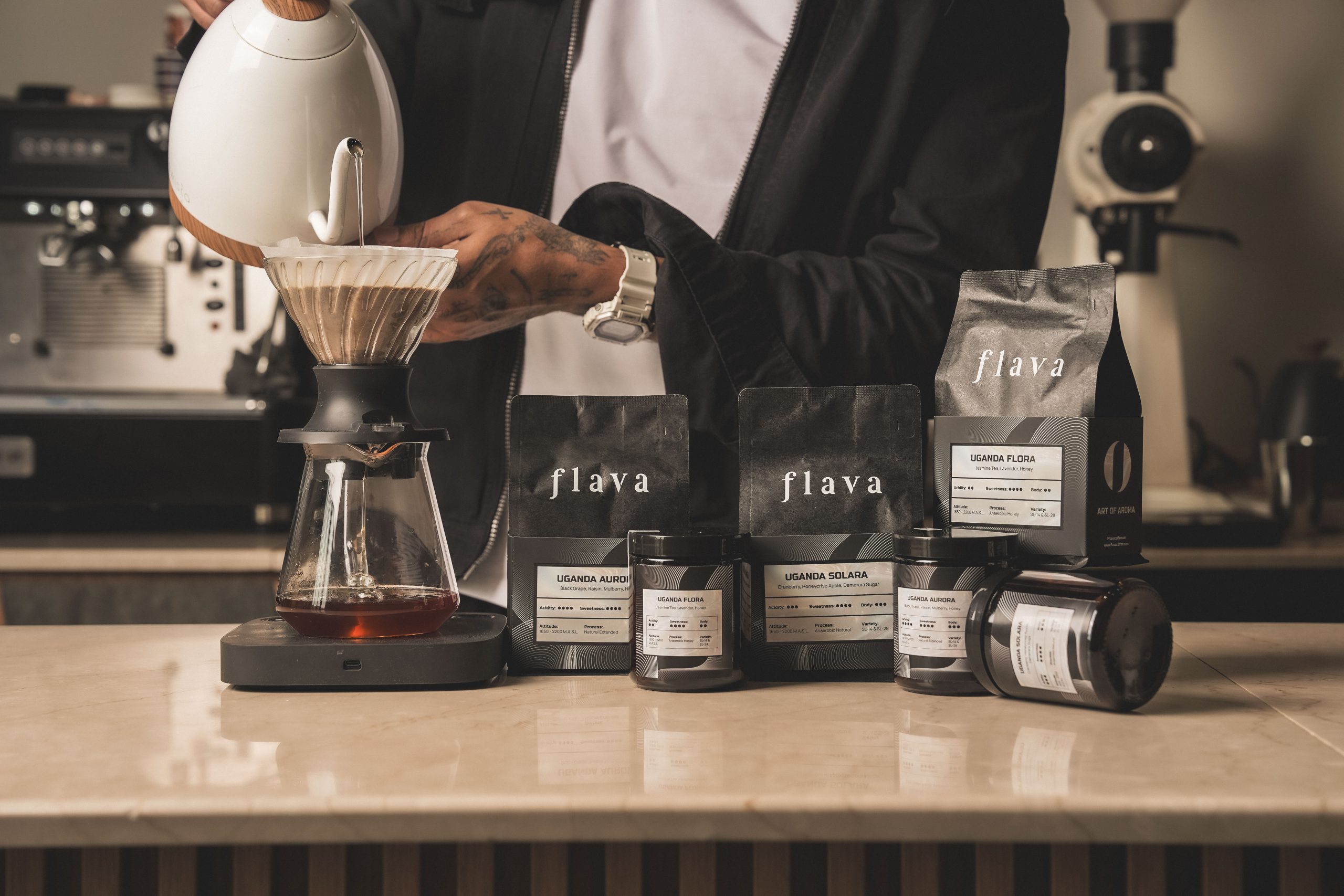

Dubai’s coffee scene is changing.
For years, specialty coffee in the city was often defined by familiar ideas: carefully roasted beans, flat whites, pour-overs and single origins from well-known producing countries such as Ethiopia, Colombia and Brazil.
Today, that conversation is becoming much more experimental.
More coffee drinkers are paying attention not only to where a coffee comes from, but also to how it is processed, how fermentation shapes flavour, and why the same coffee can taste completely different depending on how it is brewed.
This shift is helping create a more curious and technically informed coffee culture in Dubai.
At Flava Coffee, a Dubai-based specialty coffee roaster, that change is visible in the growing interest around experimental coffees and less familiar origins.
Uganda is one of the most interesting examples.
The country has a long coffee-growing history and is one of Africa’s major producers, yet it has often received less attention in the specialty market than origins such as Ethiopia or Kenya.
That is beginning to change.
A growing number of Ugandan coffees are being produced with greater focus on quality, traceability and more controlled post-harvest processing. Natural processing, extended fermentation and anaerobic techniques are giving producers and roasters new ways to shape flavour and create more distinctive cup profiles.
One recent example is Uganda Aurora, a natural extended-process coffee roasted by Flava Coffee.
The coffee received Bronze at the 2026 Global Coffee Awards MENA in the Espresso Single Origin Experimental category.
What makes Uganda Aurora especially interesting is how dramatically its sensory profile changes depending on the brewing method.
As a filter coffee, it presents a lighter, fruit-forward and fermented character. As espresso, however, the coffee becomes more concentrated and lactic, developing a creamy profile that can feel almost cheesecake-like.
This contrast reflects a wider shift in specialty coffee.
For a long time, cafés tended to categorise coffees simply as “filter” or “espresso.” Experimental coffees challenge that idea because they can behave very differently depending on extraction, temperature, ratio and brew method.
A coffee that feels bright and delicate in a filter brew may become sweeter, heavier and more complex as espresso.
For baristas, that means dial-in is becoming more important.
Highly processed coffees often respond strongly to small changes in grind size, water temperature, dose and extraction time. A recipe that works perfectly for a traditional house blend may not suit a coffee with a more fermented or fruit-driven profile.
This is one reason why experimental coffee is pushing cafés to become more technically precise.
It is also changing how customers think about coffee.
Instead of asking only whether a coffee is strong or mild, more consumers are beginning to ask about origin, processing, roast style and tasting notes.
That curiosity is particularly well suited to Dubai.
The city has a highly international food and beverage culture, and consumers are already used to discovering new concepts, premium products and global flavours.
Specialty coffee naturally fits into that environment.
As Dubai’s coffee market matures, the experience is becoming less about simply ordering a drink and more about discovering how different variables influence the final cup.
Processing plays a major role in that.
Natural processing, where the coffee cherry dries around the seed, can produce greater sweetness, body and fruit intensity.
Extended natural processing gives fermentation more time to influence flavour, often creating deeper fruit character and more unusual sensory notes.
Anaerobic fermentation takes place in a low-oxygen environment and can result in heightened aromatics, distinctive acidity and more expressive fruit profiles.
These techniques are helping producers create coffees that feel more individual, while giving roasters more opportunities to develop unique flavour experiences.
At Flava Coffee, the approach is to treat each coffee as its own expression rather than forcing it into a standard recipe.
The company’s Head of Quality, an Arabica Licensed Q Grader, evaluates coffees across different brewing methods to understand how each one performs and where its character is most clearly expressed.
That type of evaluation is becoming increasingly relevant as Dubai’s specialty coffee community becomes more knowledgeable.
It also gives space for origins such as Uganda to build stronger recognition.
Compared with Ethiopia, Colombia or Brazil, Uganda is still relatively underrepresented in many specialty coffee conversations. Yet its highland Arabica, diverse growing conditions and evolving processing methods give it significant potential.
Awards can help draw attention to these coffees, but the larger opportunity is education.
The more consumers understand about processing and brewing, the more open they become to trying unfamiliar origins and unconventional flavour profiles.
That creates space for roasters and cafés to move beyond safe, familiar offerings and introduce coffees that feel more distinctive.
For Dubai’s coffee scene, this could be the next stage of growth.
Experimental coffee is unlikely to remain a niche category.
As consumers become more curious and cafés become more technically advanced, these coffees are likely to become a more normal part of the specialty coffee experience.
For drinkers, that means more variety.
For baristas, it means more precision.
And for origins such as Uganda, it means a greater opportunity to be recognised for quality, complexity and innovation.
Flava Coffee has also published a detailed educational guide on Ugandan specialty coffee, processing methods and flavour development, including a closer look at Uganda Aurora:
https://flavacoffee.com/pages/uganda-specialty-coffee-guide
About Flava Coffee
Flava Coffee is a specialty coffee roaster based in Dubai, UAE. The company works with single-origin, experimental and specialty coffees from a range of producing countries, with a focus on quality, sensory development and the “Art of Aroma.”
Website:
https://flavacoffee.com/
See also: the best restaurants in Dubai by neighbourhood, Aurōm Is Bringing Botanical Drinks Theatre to Dubai’s Coffee Scene and Stomping Grounds Marks International Coffee Day With Buy One, Get One Free Coffee and Bottomless Filter.