


The UAE built its economy on oil and migrant labour, and it feeds its population on imports. That dependence has made food security a national priority — one that grows more pressing as the population rises.
The Gulf state is now reshaping its food systems through a national strategy that combines commercial partnerships, infrastructure investment, and overseas acquisitions. The aim is to cut reliance on imports and reduce exposure to climate shocks and supply chain failures.
A national strategy with long-term targets
The UAE’s arid climate, thin arable land, and limited water supply make domestic food production alone an unrealistic goal.
The government responded by launching the National Food Security Strategy 2051 in 2018, with the stated aim of reaching the top of the Global Food Security Index, per the UAE government.
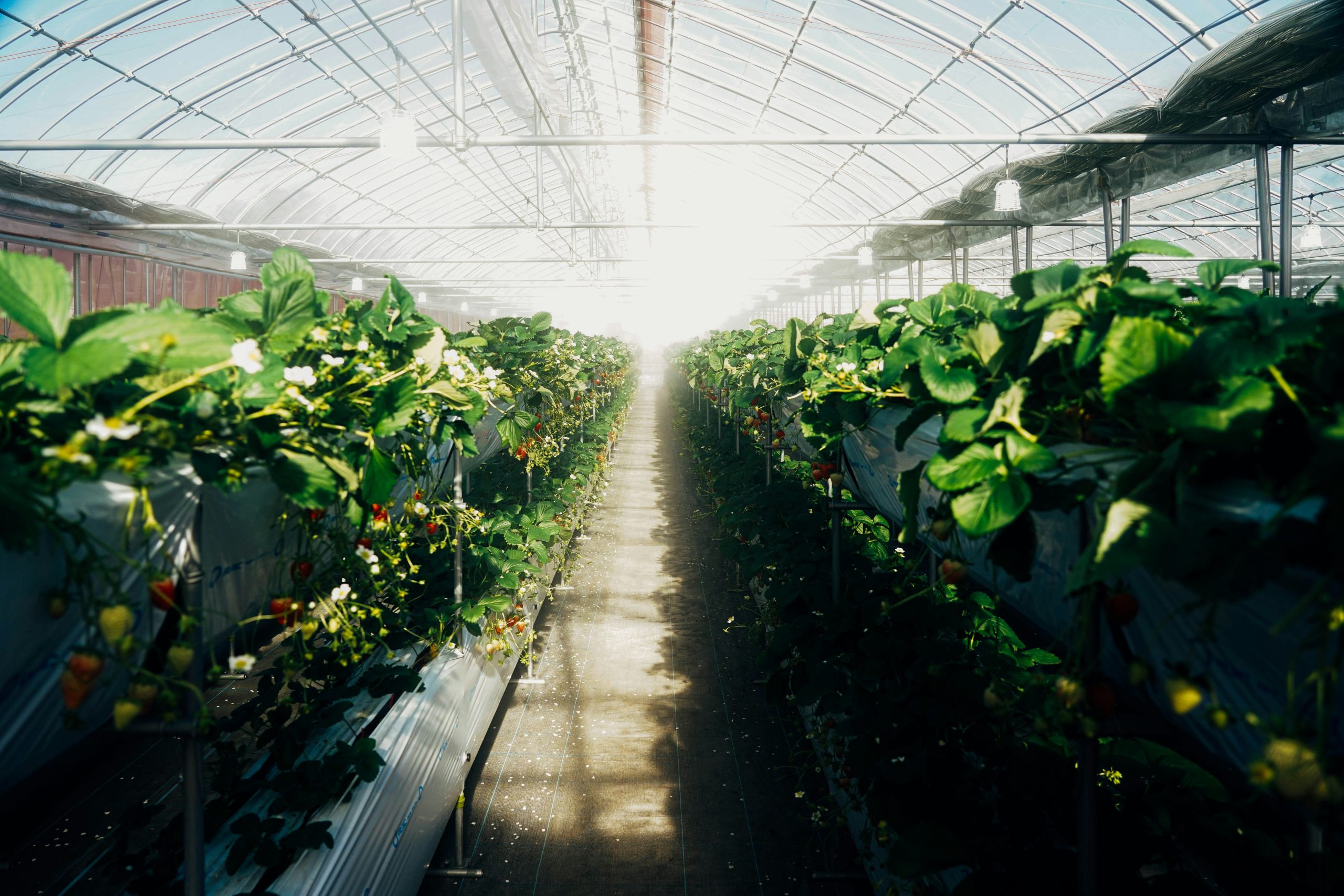
The targets set are stretching: raise domestic food production to 50% of total consumption by 2051, secure three to five alternative supply sources for each staple food, and cut food waste. To deliver this, the strategy includes 38 initiatives covering local production and import diversification, with a strong focus on vertical farming, hydroponics, and desert-adapted seeds.
Infrastructure and global investment sit alongside technology in the government’s approach.
Building the infrastructure to handle imports
A dependable food supply needs resilient infrastructure to support it. State-owned DP World announced in January a major expansion of the existing Al Aweer Central Fruit and Vegetable Market into one of the world’s largest and most advanced food trade hubs — the Dubai Food District.
The first phase is due to start in 2027. The site will grow to 29 million square feet, more than double its current size, and will bring together trade, storage, processing, and distribution under one roof.
Shivya Puri, Senior Research Analyst, Food & Beverages at Mordor Intelligence, explains that the project tackles vulnerability not by replacing imports, but by making them more secure. She says the district incorporates advanced cold-chain infrastructure, temperature-controlled warehousing, digital documentation systems, and quality inspection facilities to strengthen resilience against global supply shocks.
“Centralised logistics reduces spoilage, improves traceability, shortens clearance times, and strengthens price stability — all essential elements of food security in an import-dependent nation,” Puri says.
Overseas investment and agricultural acquisitions
Abu Dhabi’s sovereign wealth funds are extending their reach across global food and agriculture markets to complement what is being built at home.
In September 2021, ADQ took a 45% indirect stake in Louis Dreyfus Company, one of the world’s leading agricultural commodity merchants and a member of the “ABCD” group of major grain traders. It was the first time in the company’s 170-year history that a non-family shareholder had come on board. The deal included a long-term supply agreement for agricultural commodities to the UAE.
ADQ also holds a 50% stake in Al Dahra Holding, an Abu Dhabi-based agribusiness that operates across 20 countries with roughly 400,000 acres of land. Its acquisitions include Agricost in Romania in 2018 — Europe’s largest consolidated farm at 56,000 hectares on Braila Island — and more than 18,000 hectares of farmland near Belgrade, Serbia. More recently, Al Dahra has been in talks with Kenya to lease 200,000 acres for irrigation development, with a potential $800 million investment. It also operates in North America, Egypt, Namibia, and Morocco, where it supplies animal feed and grains to Middle East and Asian markets.
In June 2025, ADQ announced a deal to acquire a 35% stake in Limagrain Vegetable Seeds, the vegetable seed division of French cooperative Limagrain. The agreement includes a joint research and development venture with Silal, an ADQ agri-tech portfolio company, to develop vegetable seed varieties suited to desert conditions — resistant to heat, drought, and salinity. The initial focus is on cucumbers, tomatoes, and melons.
Technology investment at home
The UAE is also investing in domestic agri-tech. In 2019, the Abu Dhabi Investment Office (ADIO) launched a $272 million (AED 1 billion) AgTech Incentive Programme to develop Abu Dhabi as a centre for desert agriculture. In 2020, ADIO put $100 million (AED 367 million) into AeroFarms, Responsive Drip Irrigation, Madar Farms, and RNZ, then followed with $41 million (AED 152 million) for Nanoracks, FreshToHome, and Pure Harvest to advance agri-tech across land, sea, and space.
The challenge of a growing population
Despite these investments, the UAE’s food security faces real strain from a population that keeps growing. Worldometers data shows the UAE population has already surpassed 11.5 million in 2026 and is on course to reach a projected 15.3 million by 2050.
By 2029, food consumption in the UAE is expected to reach 8.8 million metric tonnes, according to Alpen Capital’s GCC Food Industry Report 2025, driven by rising incomes, tourism growth, and the varied needs of a multicultural, expatriate-majority population.
Supply is not keeping up. With 85-90% of food coming from abroad, any external shock — whether the war in Ukraine or instability in the Red Sea — hits the country’s food supply directly.
