


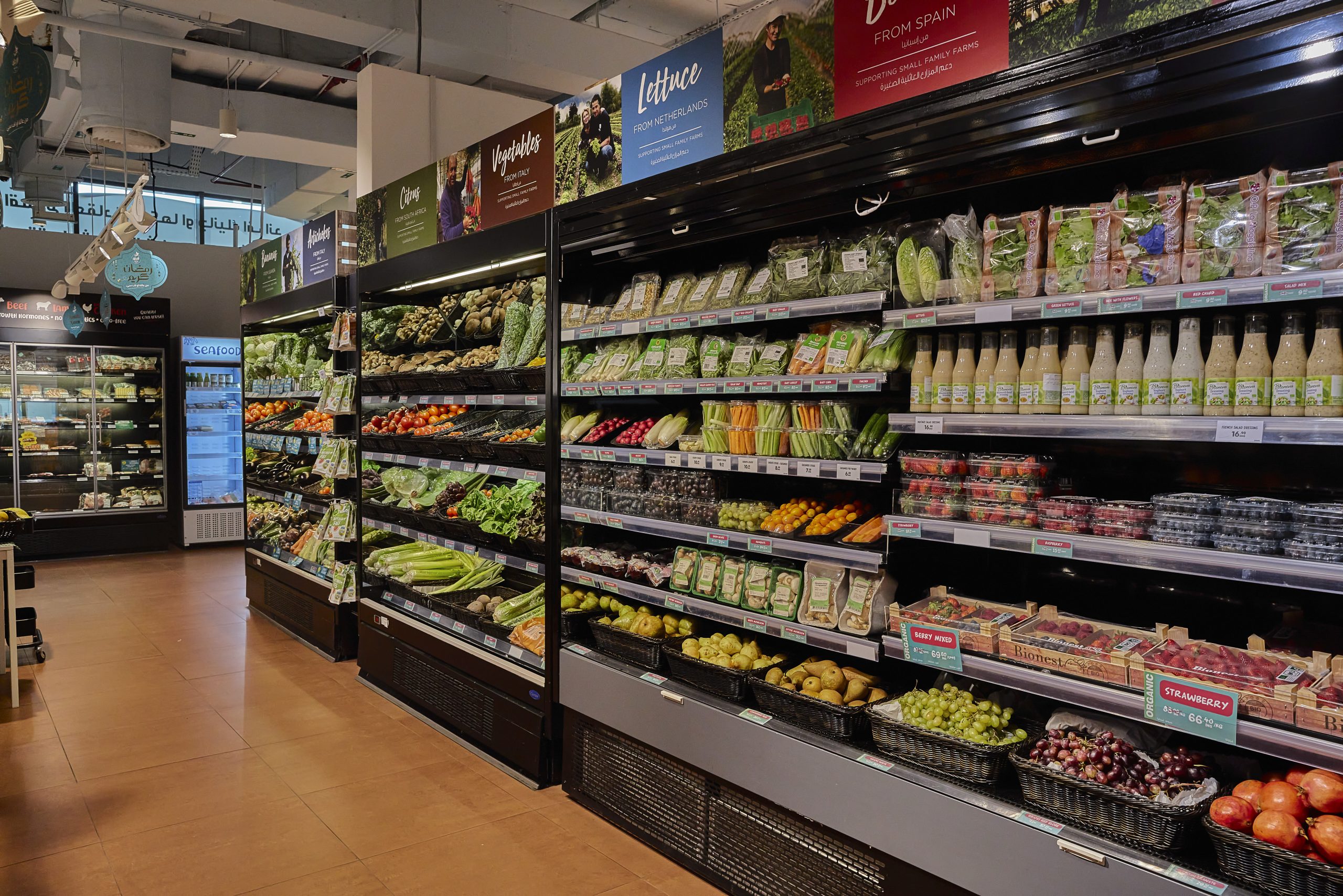
As questions around regional stability grow, some residents are seeking reassurance about access to everyday essentials. Organic Foods & Café is encouraging calm, and the evidence supports that position. The UAE Ministry of Economy and Tourism has confirmed that strategic reserves are sufficient for four to six months, with import activity and supply flows continuing as normal. The Minister of Economy and Tourism, Abdulla bin Touq Al Marri, has been clear on the matter, stating that food security represents a red line for the country’s leadership, with zero tolerance for compromise.
The UAE’s stability in this area comes from the structure of its supply system, not simply from stockpiles. Its import base spans multiple continents, which reduces reliance on any single trade route. The country’s air, sea, and land networks give it the flexibility to reroute supply chains quickly if any one corridor faces disruption. Firas Nasir, CEO of Organic Foods & Café and Co-CIO of the Gulf Japan Food Fund, points to the wider ecosystem behind this stability: “The UAE also has a robust food industry with locally produced fruit and vegetables, dairy, eggs, and a considerable ecosystem of distribution companies holding massive inventories that cater not only to the UAE but to many markets in the Middle East and Africa. These attributes place it well on the spectrum of import-dependent economies.” Nasir also notes that resilience runs through to the investment level: “Organic Foods & Café is owned by an investment platform with food security as one of its mandates. The Gulf Japan Food Fund was created to deal with situations such as this.”
At ground level, all seven Organic Foods & Café locations across Dubai and Abu Dhabi are operating normally. The brand holds around three months of buffer stock across key shelf-stable imported products and has the capacity to reroute supply chains across air, sea, and land as conditions require. With over 400 vendor partners locally and globally, the business is well-placed to manage supply disruption without passing unnecessary cost pressure on to shoppers.
For consumers, the most practical response to uncertainty is a measured one. Rather than stockpiling or reaching for processed foods under pressure, shoppers are encouraged to maintain a sensible supply of whole-food staples such as grains, legumes, nuts, and fresh and frozen produce. These offer real nutritional value and a longer shelf life. Buying only what is needed supports personal wellbeing and helps keep shelves accessible for the wider community.
Customers across the UAE have responded with a degree of confidence in the country’s food system, and that confidence is well-founded. The supply infrastructure is diversified, well-managed, and reflects the UAE’s long-term commitment to food security.
For more information, visit www.organicfoodsandcafe.com or follow @organicfoodsandcafegcc on social media.
